
I am NOT in support of the decision of the Confederation of African Football, CAF, to award the 2025 AFCON trophy to Morocco, the team that LOST in the final match on January 18, 2026.
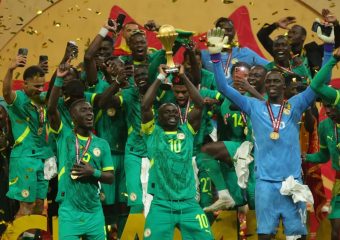
It has been two months since Senegal were crowned Kings of African football. The drama of the final match has receded in the mind and the world has returned to normalcy.
To take away the trophy, thereafter, on technical grounds rather than for the actual result on the field of play, makes the decision by CAF bizarre, condemnable, unacceptable and totally unjustifiable.
It is not surprising that the world is up in arms against the Organisation. Its judgement, unprecedented in football history, has been condemned by fans and followers of the beautiful game around the world.
I am still pondering why CAF chose to tread the thorny path. What could have motivated such an unpopular decision that has shaken the Organisation to its foundation?
Agreed that the rules and regulations governing the conduct of football matches do NOT cover every possible happenstance. There are peculiar incidences that time will throw up that will demand experience and wisdom to deal with when they show. One of such incidences is what AFCON 2025 now presents.
My microscope is out to take a closer look at the events of January 18, 2026, and relate to what has happened in the past few days when CAF’s Appeal Committee released a ‘poisoned’ verdict. They reversed the result of the final match of AFCON 2025. The champions (Senegal) were crowned deservedly by the Presidents of CAF and FIFA in front of a global audience.
Two whole months have passed.
The dust of the drama of that match has settled. The world has returned to normalcy. Senegal have even ended their celebration.
Then comes a completely unexpected bombshell from ‘hell’ delivered by CAF’s Appeals Committee. It is the verdict of a ‘quiet’ petition brought before it by the Moroccan Football Federation concerning a breach of regulations by Senegal during the match.
The Disciplinary Committee of CAF had met earlier over the petition and dismissed it. The Moroccan federation appealed the verdict. The Appeals Committee examined it, seemingly found merit in the petition, and after two months, took what must go down in the history of football as one of the most unpopular decisions ever. It reversed the result of the final match, and awarded it to the host team (Morocco) that were defeated on the field of play.
The decision by CAF is unprecedented. It has been roundly condemned by the rest of the world for its insensitivity.
It, therefore, makes sense for me to set aside all biases and sentiments, and examine the issues through a microscopic lens even if as a purely academic exercise.
What are the issues?
The regulations of CAF and of FIFA are clear and simple on the issue of walk-outs by teams.
With a few minutes left of regulation time, Morocco were awarded a penalty kick.
The Senegalese protested the referee’s decision. They refused to continue with the game. They walked out of the field and went back to their dressing room. Only their Captain, Sadio Mane, who knew the consequences of their action, remained on the field whilst urging his mates to return and complete the match.
The fracas lasted 17 minutes, 2 minutes beyond the maximum 15 minutes period allowed before a referee mandatorily must end the match.
Meanwhile, the regulation is clear:
When a football team walks off the pitch before a match ends without authorization, they forfeit the match. The act also attracts an automatic 3-0 loss.
The team may also face additional punishments including fines, point deductions, or disqualification from further participation in the competition.
In addition, even if players eventually return, the initial act of walking off can be judged as a violation requiring forfeiture.
Meanwhile, teams can lodge a petition with organizers concerning incidences or conducts before, during and after a match. Such petitions are looked at by relevant committees after the match, and if found justified (even after the match is concluded) can affect the eventual result of a match beyond a referee’s final report!
On the field of play, the referee’s decisions are considered to be final, but beyond that, other issues can be brought up through petitions by either of the teams that can affect the final outcome. So, a referee’s report is not sacrosanct all the time.
A simple example is how Nigeria petitioned FIFA against South Africa for using an ineligible player during their match. The verdict took several weeks to arrive, but at the end the petition ‘won’ resulting in the forfeiture of the match by South Africa and deduction of points from their scores. Nigeria gained points and goals through the petition, a decision that took them to the next round of qualification. There was no condemnation by anyone. The world did not end.
So, I am thinking.
Had the match between Morocco and Senegal not being the final match of AFCON, but a qualifier, what would have happened?
No body would have protested the eventual verdict! That’s the reality. Once there is a breach of regulation, the prescribed sanction should be applied without fear or favour.
The issue with the AFCON final match is that it was the final match. There was no time to entertain any major petitions.
The trophy was handed over. National celebrations took place all over Senegal. The players were lavishly celebrated and rewarded. Life returned to normal for everyone except the Appeals Committee that still had responsibility to look at the merits of the petition before it and to pass judgement in accordance to the rules, even if there is the risk of dire consequences not good for optics of the championship.
That is what this matter has thrown up.
If this incident had been at the finals of the Olympic Games, for example, and medals had been won, awarded and celebrated, would reversal of the results have followed discovery of infringement of the rules? Yes!
The Olympics are full of stories of reversed results, withdrawal of medals and cancellation of records following breaches and illegalities that may be discovered months after.
For example, Nigeria’s 400 meters relay quartet of the 2002 Olympics rare Gold medalists because the USA team that won the race and were stripped of their Gold Medal months or even years later, when their victory was found to be tainted!
Through a petition, Nigeria got a lifeline to play in the final round of the African World Cup qualifiers last year. They eventually lost to Congo Democratic Republic. Nigeria petitioned again against CDR but was thrown out last week. Each time, FIFA’s verdict took several months and sittings of their Appeals Committee to arrive.
I am thinking.
What makes this particular case of AFCON 2025 different is that it was the final match of a Championship. Had it been a qualifier-match, the decision by CAF would not have attracted the same level of public opprobrium and condemnation?
The indisputable facts are these:
Senegal committed a ‘cardinal sin’ by walking out of the field in protest when a penalty kick was awarded against them a few minutes to the end of the game.
A goal from the kick would have seen them lose the trophy.
However, the Senegalese protested, stopped the game and walked out of the field for a total of 17 minutes.
According to the rules, for this action, the Senegalese were guilty.
All the referee needed to do was blow his whistle at the end of 10 to 15 minutes and ended the match. No one would have raised any issues. The regulations were flouted, period. Everything else around that happened was ‘grammar’.
My humble verdict.
That the referee restarted the match after 17 minutes automatically nullified the rule of forfeiture. The match restarted and concluded. The rest is ‘story’.
The resumption has to be accepted. Morocco lost the penalty kick. Senegal scored an additional goal. The match ended. The CAF President as well as the FIFA president presented the winner with medals and the trophy in recognition of the decisions voluntarily taken by the referee that are final and irreversible!
Under no circumstances can there be justification for a revisit of the incident again and revision of the decision by the referee.
There was no time or space for a petition to be entertained. The result cannot be tampered with again.
If any infringements were found, thereafter, the culprits involved could be sanctioned and punished, but not by reversing the result of the match.
That’s the common sense application of the rules during a championship where there is no time for investigations and legal proceedings.
The regulations need to be looked at again and modified to embrace an incident such as this in the future.
For now, I think CAF should reverse itself and return the victory to Senegal! Period!
Related posts
 Featured, Football
 Appeal to President BAT and to all Nigerians – Pls stop the NFF elections!
On March 22, 1998, I was officially decorated with the honour and title of ‘Sports Ambassador of the Federal Republic...
 Featured, General, Politics
 24 hours with a Governor that loves dancing and football!
It is not every one that is gifted the opportunity of spending an entire 24 hours (without an agenda) in...
 Featured, Football
 Who wins – Spain or Argentina?
The curtains will be drawn on the 2026 FIFA World Cup tomorrow. The 104 football battles fought amongst 48 countries...
 Featured, Football
 Heading to the Civil Court to help Nigerian football!
One of the great shocks in world football this past week is Italy’s failure to qualify for the FIFA World...
 Featured, Football
 The Onigbinde that I knew – a humble tribute!
I was one of many that did not like Chief Festus Onigbinde (that’s how he was referred to at the...




Latest Comments